

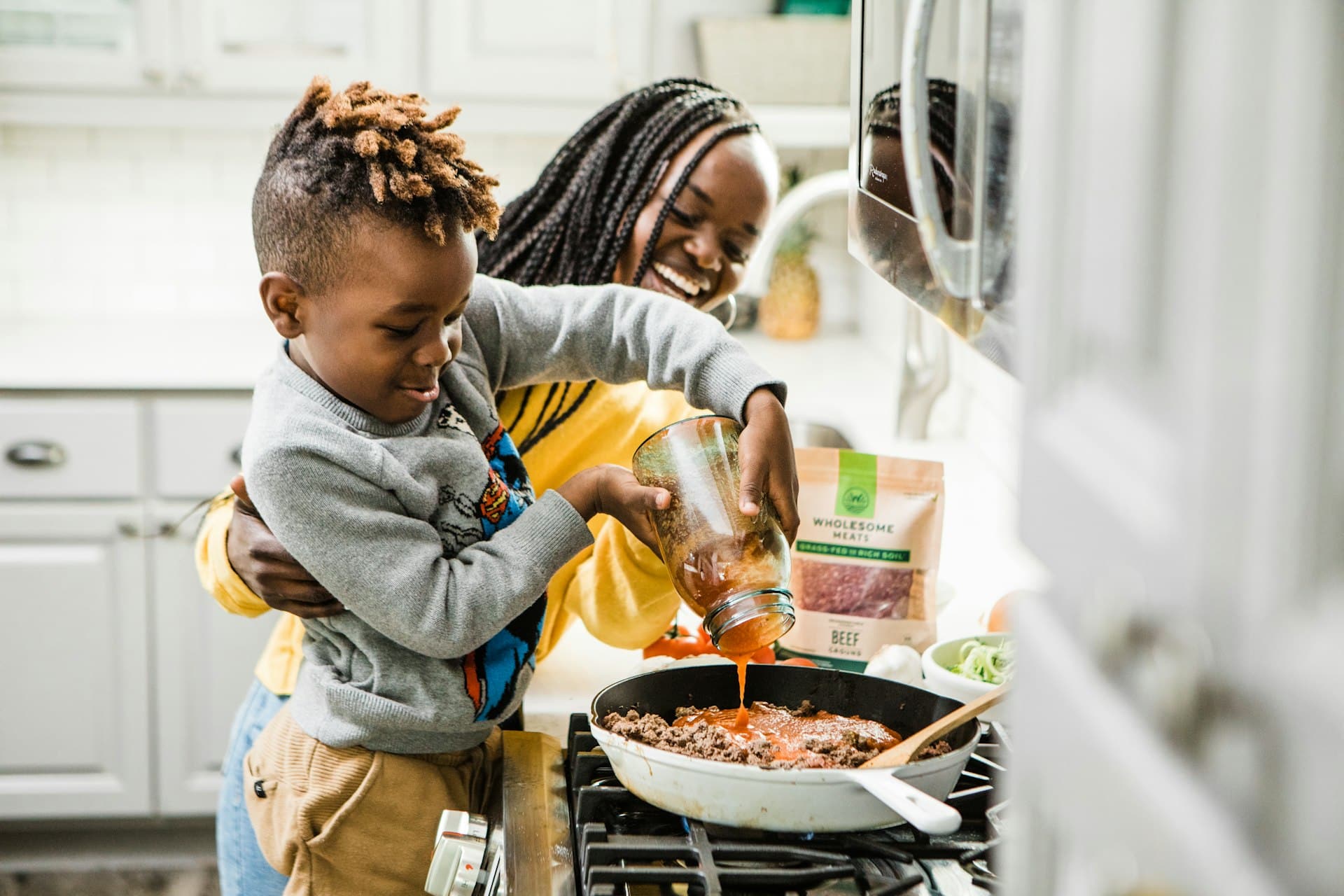
Cooking with your child is about more than only preparing a meal. It’s an opportunity to build food skills, develop nutrition knowledge, and help children feel more comfortable exploring a variety of foods. Research suggests that involving children in food prep can support food acceptance, including fruits and veggies. From washing produce and stirring ingredients to touching, smelling, and exploring unfamiliar foods, these everyday experiences help children become more familiar with different flavors and textures.
The goal isn’t to get your child to eat everything you make. It’s to help them feel comfortable exploring a variety of foods over time.
Why Cooking Together Matters
1. Helps children become more comfortable with new foods.
Children often need repeated opportunities to become familiar with a food before they’re willing to taste it. Exposure doesn’t have to mean eating! Looking at, touching, smelling, or helping prepare a food all count.
2. Encourages variety and food acceptance.
Cooking gives opportunities to interact with ingredients they may not typically encounter, making unfamiliar foods feel less intimidating over time.
3. Builds confidence and practical skills.
Simple tasks like washing vegetables, stirring, measuring, and assembling meals help children develop independence and confidence in the kitchen while learning about food and how it nourishes their bodies.
4. Supports positive eating habits over time.
Repeated exposure, positive food experiences, and seeing parents enjoy a variety of foods can help shape children’s food preferences and eating behaviors. These experiences are most beneficial when children feel supported rather than pressured to eat.
How to Make Cooking a Positive Experience
You don’t need elaborate recipes or a nutrition lesson at every meal. Start with small, age-appropriate tasks and make room for exploration.
- Let your child participate. Invite them to wash produce, tear lettuce, stir ingredients, sprinkle seasonings, or assemble a meal. Adapt tasks to their abilities and supervise as needed.
- Offer repeated, pressure-free exposure. Continue offering foods your child is learning to like, even if they’ve refused them before. Familiarity takes time, and cooking together is another opportunity to build it.
- Encourage exploration without expectations. Let your child look at, touch, smell, or describe ingredients. They don’t have to taste or eat a food for the experience to be worthwhile.
Remember: Progress Looks Different for Every Child
Your child might enthusiastically help prepare something one day and show little interest the next. They may also participate in cooking without ever tasting the finished meal. All of this is normal.
Progress might look like watching you prepare a food, helping put it on the table, touching it, or becoming comfortable having it on their plate. Small steps can build familiarity over time, even when you don’t see an immediate change in what your child eats.
One important tip: Plan ahead when possible. Cooking together can take longer, especially on busy evenings. Choose simple tasks and recipes that fit your schedule so the experience stays enjoyable rather than becoming another source of stress.
The Takeaway
Cooking together is a great way to help your child build food skills, explore new flavors and textures, and develop a positive relationship with food. You don’t need a perfect recipe or a child who eats everything. Start small, keep the experience enjoyable, and let curiosity lead the way. Over time, these everyday experiences can help lay the foundation for greater food acceptance and a more varied diet.