

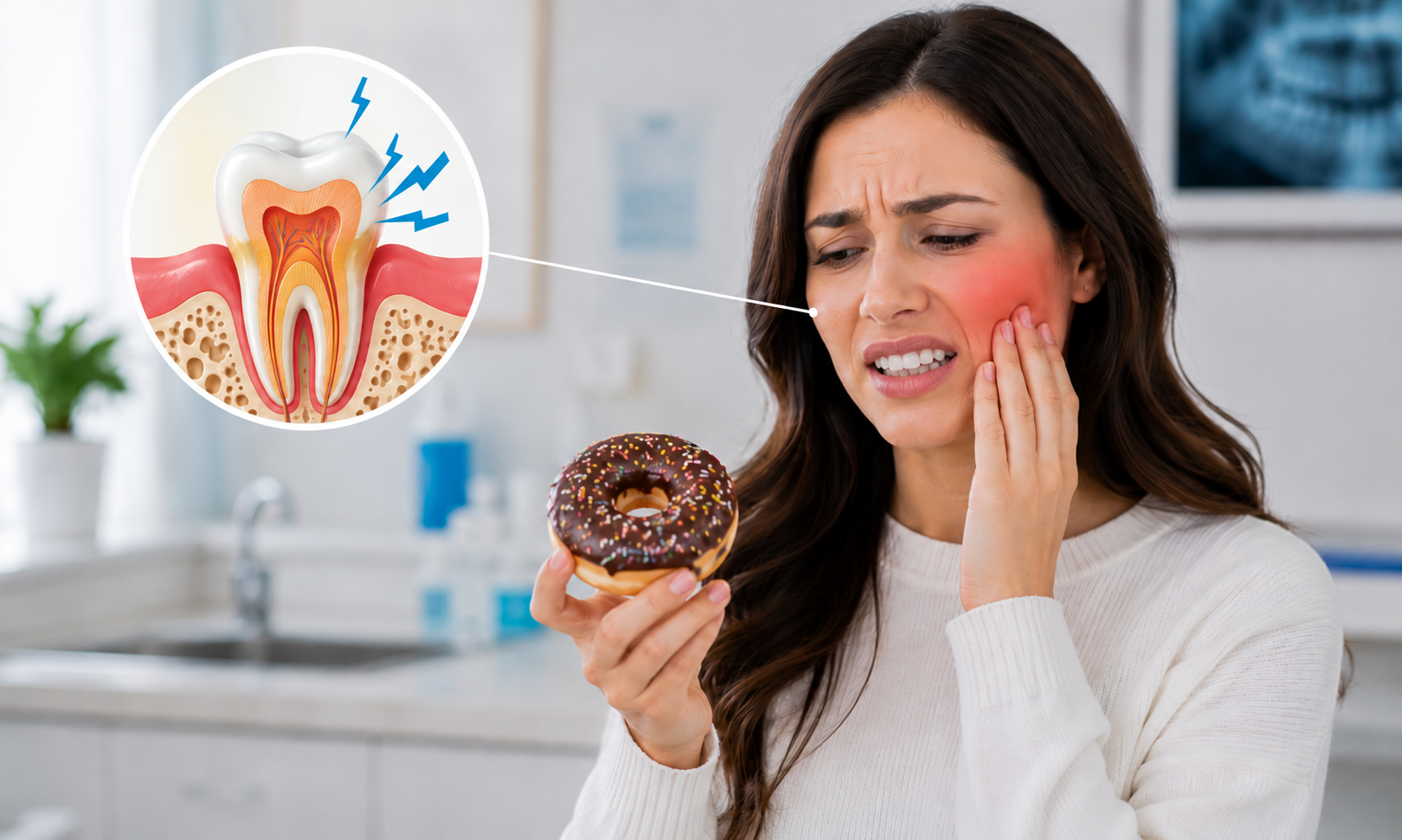
Teeth sensitive to sugar may occur when enamel protection changes or inner tooth structures become exposed. Sugar itself does not directly damage nerves, but sugar-related exposure may trigger discomfort when teeth have underlying sensitivity conditions. At Bright Healthy Smiles, many patients begin with Oral Examinations / Dental Check Ups because identifying the cause often determines which care approach may help.
Quick Facts
What it is:
Sugar sensitivity is tooth discomfort triggered by sweet foods or drinks contacting exposed or vulnerable tooth structures.
Who it is for:
- Patients with enamel wear
- Patients with cavities
- Patients with gum recession
- Patients with orthodontic appliances
- Children with frequent sugar exposure
Main benefits:
- Identifies possible causes
- Detects enamel changes
- Evaluates cavity risk
- Supports treatment planning
- May reduce recurring discomfort
Limitations:
- Causes vary by condition
- Symptoms may overlap
- Home remedies may not address underlying issues
Timeline / durability:
Sensitivity duration depends on enamel condition, oral hygiene patterns, cavity status, and treatment needs.
Why Can Sugar Trigger Tooth Sensitivity?
Sugar sensitivity often develops when protective tooth layers become thinner or exposed.
Enamel protects the outer tooth surface. Dentin sits beneath enamel and contains microscopic channels connected to nerve tissue. If dentin becomes exposed, sweet foods may stimulate these pathways.
Common contributing factors include:
- Enamel erosion
- Tooth decay
- Gum recession
- Aggressive brushing habits
- Orthodontic changes
- Tooth fractures
Cause → effect → solution:
Enamel wear → dentin exposure → sensitivity management
Example: A child who drinks acidic juice several times daily may gradually experience enamel changes that increase sensitivity.
How Cavities May Cause Sensitivity to Sugar
Cavities may create sensitivity because bacteria weaken tooth structure.
Dietary sugars may support bacterial activity that contributes to acid production. Increased acid exposure may gradually weaken enamel integrity over time.
Common cavity-related signs include:
- Sharp discomfort with sweets
- Visible dark spots
- Food trapping areas
- Temperature sensitivity
- Localized pain while chewing
Cause → effect → solution:
Bacterial activity → enamel breakdown → treatment evaluation
Example: A patient may notice discomfort only after candy or desserts before developing more consistent symptoms.
Patients with cavity-related sensitivity sometimes undergo Dental Fillings because restoring weakened areas may help reduce exposure.
How Enamel Erosion May Increase Sugar Sensitivity
Enamel erosion may contribute to sensitivity because enamel thickness may gradually change over time.
Acids and mechanical wear may gradually reduce enamel thickness.
Common erosion factors include:
- Carbonated drinks
- Citrus beverages
- Acid reflux
- Teeth grinding
- Frequent acidic snacks
Cause → effect → solution:
Acid exposure → enamel thinning → sensitivity evaluation
Example: A teenager consuming sports drinks several times daily may experience increased discomfort with sweet foods.
How Orthodontic Treatment May Affect Sensitivity
Orthodontic treatment may create short-term sensitivity because tooth movement temporarily alters pressure patterns. Movement itself does not damage teeth, but adjustment periods may temporarily increase pressure-related discomfort.
Examples include:
- Braces adjustments
- Aligner changes
- Pressure changes
- Cleaning challenges near brackets
Cause → effect → solution:
Tooth movement → temporary sensitivity → monitoring and evaluation
Example: Patients beginning Invisalign for Teens and Adults sometimes notice brief sensitivity changes during aligner transitions.
How Diet Patterns May Affect Sugar Sensitivity
Diet patterns may influence sensitivity because frequency often matters more than quantity.
Repeated sugar exposure may increase acid production throughout the day.
Patterns that may contribute include:
- Frequent snacking
- Sugary drinks between meals
- Sticky candy intake
- Nighttime sweet foods
Comparison:
| Pattern | Potential Effect |
| Sugar during meals | Lower exposure frequency |
| Frequent snacking | Increased acid exposure |
| Water after sweets | May reduce residue |
| Continuous sipping | Longer exposure periods |
Example: Eating candy once with a meal creates different exposure patterns than consuming sweet drinks throughout the day.
Which Conditions May Increase Risk?
Several oral conditions may increase sensitivity risk.
Condition-based examples:
| Condition | Possible Effect |
| Tooth decay | Surface breakdown |
| Gum recession | Root exposure |
| Enamel wear | Reduced protection |
| Teeth grinding | Increased tooth pressure |
| Orthodontic treatment | Temporary sensitivity |
Different conditions may create different sensitivity patterns, which is why evaluation often focuses on identifying the underlying cause.
How Teeth Grinding May Increase Sugar Sensitivity
Teeth grinding may increase sugar sensitivity because repeated pressure may gradually weaken protective tooth surfaces. Grinding, also called bruxism, may gradually expose underlying tooth structures over time.
Common grinding-related factors may include:
Nighttime clenching
Daytime stress habits
Jaw tension
Uneven bite pressure
Long-term enamel wear
Cause → effect → solution:
Repeated grinding → surface stress → sensitivity evaluation
Example: A patient who frequently wakes with jaw soreness or morning headaches may also notice increasing discomfort with sweet foods over time. Surface wear patterns may create additional sensitivity when dentin becomes less protected.
Sugar Sensitivity vs Cavity Sensitivity
Similar symptoms may overlap, but symptom duration and triggers sometimes help distinguish cavity-related discomfort from sugar-related tooth sensitivity.
| Symptom | Sugar Sensitivity | Cavity-related Sensitivity |
| Trigger | Sweet foods | Sweet + temperature |
| Duration | Brief | May linger |
| Cause | Dentin exposure | Tooth structure damage |
How Dentists Evaluate Sugar Sensitivity
Dental evaluations may help determine whether sugar sensitivity relates to enamel wear, cavities, gum recession, or structural tooth changes.
Evaluation methods may include:
- Visual examination
- Cavity assessment
- Bite evaluation
- Sensitivity testing
- Digital imaging when indicated
Cause → effect → solution:
Symptom pattern → condition identification → individualized treatment planning
Example: A patient with sensitivity to sweets and cold beverages may require a different evaluation pathway than someone experiencing discomfort only while chewing.
Evaluation findings may help identify patterns that guide treatment recommendations.
Can Home Care Help Reduce Sensitivity?
Home care may help support symptom management, although effectiveness depends on the cause.
Helpful strategies may include:
- Soft-bristle toothbrush use
- Fluoride toothpaste use
- Gentle brushing technique
- Reduced acidic beverage intake
- Consistent oral hygiene habits
Cause → effect → outcome:
Improved oral habits → reduced irritation → better comfort support
Patients with plaque buildup or hygiene concerns sometimes receive Dental Cleaning recommendations because biofilm accumulation may contribute to ongoing irritation.
FAQ
Why do sweets hurt only one tooth?
Single-tooth sensitivity sometimes occurs when cavities, fractures, or localized enamel wear affect one area.
Can sugar sensitivity mean a cavity?
Cavities are one possible cause, but enamel wear and gum recession may also contribute.
Can braces make teeth sensitive to sugar?
Braces and aligners sometimes create temporary pressure-related sensitivity changes.
Can sensitive teeth improve naturally?
Some cases improve after habit changes, while others depend on identifying underlying conditions.
Should children have sugar sensitivity?
Children may develop sensitivity if cavities, enamel changes, or hygiene concerns are present.
What to Do Next
Tooth sensitivity triggered by sugar may develop because enamel changes, decay patterns, exposed dentin, or oral habits affect how teeth respond to stimulation. Identifying the underlying cause may help determine which management approach best fits the condition.
If you are noticing discomfort after candy, sweet drinks, temperature changes, or pressure, sensitivity may have multiple contributing factors. If this applies to your situation, evaluating brushing habits, dietary patterns, and tooth condition may help clarify what factors are involved.
Bright Healthy Smiles provides individualized evaluations for patients experiencing sugar-related tooth sensitivity. Patients with recurring discomfort may request a consultation to evaluate possible causes, review contributing habits, and discuss appropriate care options based on their condition.