

Many parents hear about sealants during routine dental checkups and wonder if they are really necessary. That is a fair question, especially if a child brushes well and has not had a cavity. For more on timing and what to expect at those visits, see our early dental visits.
Dental sealants for kids can be a very effective way to lower the risk of cavities in the back teeth. They are thin protective coatings placed on the chewing surfaces of molars, where deep grooves can trap food and bacteria more easily than smoother enamel.
Sealants do not replace brushing, flossing, or regular dental visits. They add protection in an area where even careful home care may miss plaque, the sticky film of bacteria that can lead to tooth decay.
At Bright Healthy Smiles in New York, NY, we offer gentle dental checkups that help families decide whether sealants are the right choice for their child.
Why Back Teeth Need Extra Protection
Many cavities in school-age children develop in the permanent molars. These teeth often have narrow pits and fissures, which are small grooves and creases on the chewing surface that can hold bacteria and sugars.
A toothbrush can clean the tops of these teeth, but the bristles may not reach fully into every groove. That is why a child with otherwise good oral hygiene can still get decay in the back teeth.
Sealants are one of the most practical preventive tools in pediatric services because they protect a very specific weak spot. They are simple, clinically useful, and often worth discussing as soon as molars come in.
When Kids Usually Get Sealants
Many children get sealants on their first permanent molars around ages 6 to 7. Second permanent molars often become good candidates around ages 11 to 13.
Timing matters because newly erupted molars are especially vulnerable to cavities. Placing a sealant early can help protect the tooth before decay starts.
Some younger children may also benefit from sealants on baby teeth if those teeth have deep grooves or if the child has a higher cavity risk. That decision depends on the tooth pattern, past decay history, diet, and how easy the area is to keep clean.
What the Appointment Is Like
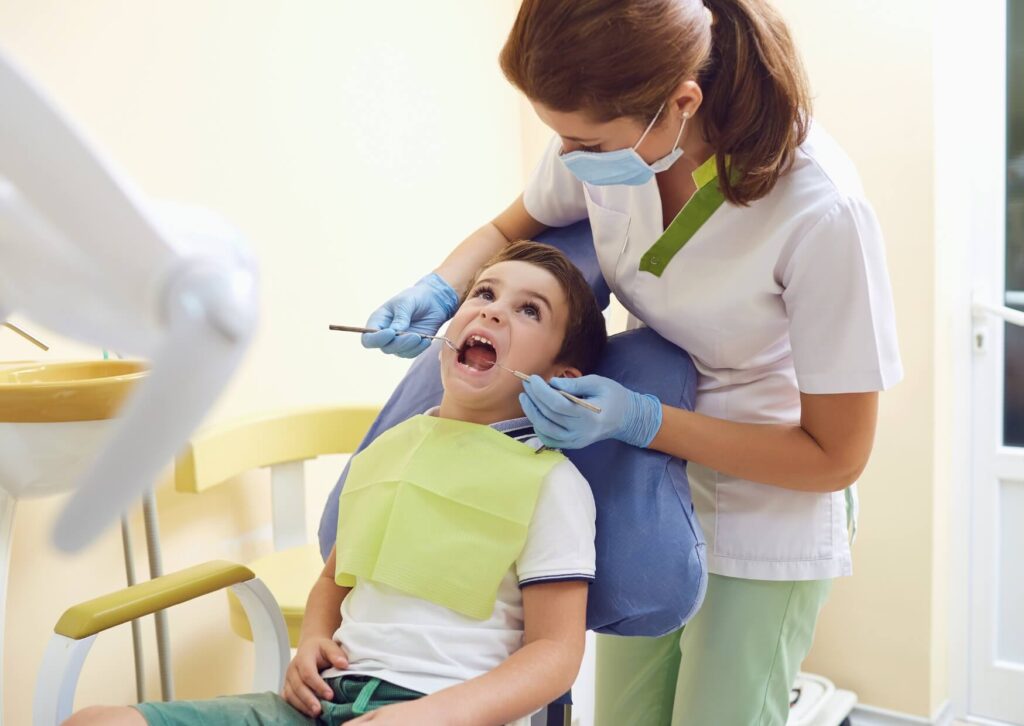
Sealants are usually placed during a regular dental visit. The process is painless and does not involve drilling if the tooth is healthy and free of decay.
First, the tooth is cleaned, often as part of dental cleanings, and then dried. Next, the surface is prepared with a conditioning material so the sealant can bond well, and the coating is painted into the grooves and hardened with a curing light.
What Kids Usually Feel
Most children feel little more than having the tooth cleaned and kept dry for a short time. The tooth may feel a little different at first, but that usually fades quickly.
This is one reason many families like sealants. They are simple, fast, and usually much easier than treating a cavity later.
How Long Sealants Last
Sealants often last several years, but they do not last forever. Chewing forces and normal wear can cause them to chip, thin out, or partly come off over time.
A dentist should check them during regular exams and replace or repair them if needed. A worn sealant is not a failure. It simply means the tooth needs maintenance, like other types of preventive dental care.
Even if a sealant does not stay fully intact for many years, it may still provide meaningful protection during a high-risk period for cavity development.
Are Sealants Better Than Fluoride?
This is a common question, but it is not really an either-or choice. Sealants and fluoride protect teeth in different ways.
Fluoride helps strengthen enamel and makes teeth more resistant to acid damage. Sealants create a physical barrier over the deep grooves of molars, which helps block food debris and bacteria from settling there.
For many children, the best prevention plan includes both. Fluoride supports the whole tooth surface, while sealants protect the chewing surfaces most likely to trap plaque.
When Sealants May Not Be the Right Choice
A dentist may decide not to place a sealant if a tooth already has a cavity that needs treatment. In that case, the tooth often needs dental fillings to restore its shape and function. In some cases, the grooves are shallow enough that a sealant may not add much benefit.
Sealants also bond best when the tooth can be kept dry during placement. If a newly erupted molar is still partly covered by gum tissue or is hard to isolate, the dentist may recommend waiting and checking again later.
This is a good example of why sealants should be based on an exam, not treated as automatic for every child or every tooth.
Signs a Child Should Be Evaluated Soon
Sealants are preventive, but they do not rule out every dental problem. If a child has tooth pain, swelling, or worsening sensitivity. For example, teeth sensitive to sugar is when a dental evaluation should not be delayed.
Other reasons to call promptly include a dark spot on a molar, pain when chewing, a chipped tooth, or a sealant that looks broken in a child with symptoms. These signs may or may not mean a cavity, but they deserve a professional evaluation.
If there is facial swelling, fever, trouble opening the mouth, or difficulty swallowing, seek urgent dental or medical care. Those symptoms can point to a more serious infection or inflammation that needs prompt attention.
What Families Can Expect After Placement
Most children can return to normal eating and drinking soon after the appointment unless the dental team gives different instructions. There is usually no recovery period.
At home, the focus stays the same: brushing twice a day with fluoride toothpaste, flossing where teeth touch, and keeping sugary snacks and drinks in check. Sealants help, but they do not make teeth cavity-proof.
A practical next step is to ask at the next checkup whether the permanent molars are in and whether their groove pattern makes sealants a good option. That keeps the decision specific to the child, the teeth, and the current cavity risk.
Bright Healthy Smiles provides gentle dental checkups in New York, NY, and nearby neighborhoods like the Upper East Side and Downtown Manhattan; please call (212) 355-7760 to schedule an exam.
FAQs
Are dental sealants safe for kids?
Yes, sealants are widely used in pediatric dentistry and are considered safe for most children. If a parent has concerns about materials, it is reasonable to ask the dental office what type of sealant is used and why.
Can a child still get a cavity under a sealant?
It can happen in some cases, especially if the sealant wears down, does not stay fully bonded, or decay was already starting before placement. That is why regular dental exams still matter.
Do sealants go on baby teeth or permanent teeth?
Most often, sealants are placed on permanent molars. Some children may also benefit from sealants on baby teeth when those teeth have deep grooves and a higher risk of decay.
Does getting sealants hurt?
Sealant placement is usually painless. If the tooth is healthy and only needs a sealant, the process typically does not involve drilling or numbing.
How do I know if my child needs sealants?
The best way is through a dental exam. A dentist can look at which molars have erupted, how deep the grooves are, whether there is any early decay, and how high the child’s cavity risk appears to be.